
-

Camo K9 Dog Harness
$68.00 – $75.00





Why do Belgian Malinois need harnesses?
A Belgian Malinois is the definition of drive: fast turns, sudden stops, and a strong pull instinct—especially when something exciting shows up. A well-fitted harness helps you manage that power without putting pressure on the neck the way a collar can.A good Malinois harness also gives you:
- Better handling (more control during training and busy walks)
- Safer pressure distribution across the chest and body
- More stability for dogs that lunge, sprint, or change direction quickly
- Extra security for “escape artists” who can back out of loose gear
How to choose the best Belgian Malinois harness
The best harness is the one that matches your dog’s job + your dog’s body. Here’s how to pick the right type.1) Choose based on purpose
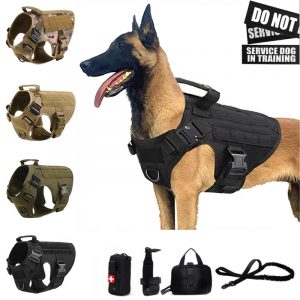
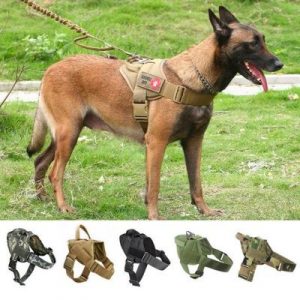
For everyday walks and training: Look for a harness with a comfortable chest panel, adjustable straps, and a secure leash clip. If pulling is an issue, a front-clip / no-pull style can help you guide your dog back toward you. For high-energy outings (hiking, long walks, outdoor work): Prioritize breathable padding, strong hardware, and a design that doesn’t restrict shoulder movement. A stable back panel can also reduce shifting while running.For working/tactical use:
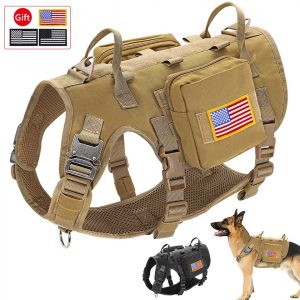
A tactical K9 harness or vest is ideal when you want a grab handle, heavier materials, and optional MOLLE-style areas for patches or light gear. For evening walks: Reflective details are a simple upgrade that makes a big difference in visibility.2) Look for these “Malinois-friendly” features
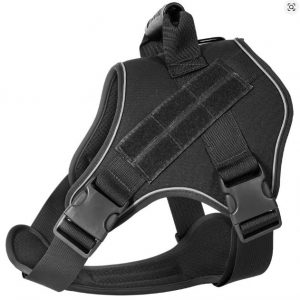
- Freedom at the shoulders: A shape that avoids cutting across the shoulder joint
- Comfort padding: Especially on the chest and belly to prevent rubbing
- Multiple adjustment points: Because Malinois builds vary (lean, muscular, deep chest)
- Secure buckles + durable stitching: For strength + sudden movement
- A sturdy top handle (optional but useful): Great for quick control at curbs, doors, and distractions
- No twisting/sliding: A harness should stay stable when your dog accelerates
How to measure and fit a Malinois harness
- A harness can be “high quality” and still fail if the fit is off. Use these simple checks:
- Chest girth: Measure the widest part of the ribcage, just behind the front legs.
- Neck circumference: Measure around the base of the neck (where a harness sits—not the collar line).
- Fit rule: Once on, you should fit two fingers comfortably under each strap—snug, not tight.
- Movement test: Let your Malinois walk, turn, and trot. The harness should not rub the armpits, slide sideways, or block the shoulders.
- Safety check: If your dog can back out, go for a more secure/adjustable style and re-check strap placement.
 No products in the cart.