
-
Belgian Shepherd Muzzle
$32.00
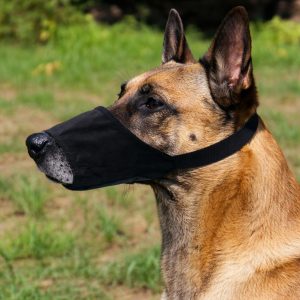
Belgian Malinois muzzles: what they’re actually for (and what they’re not)
A Belgian Malinois muzzle is not a punishment, and it’s not a shortcut that replaces training. Think of it like a seatbelt: you don’t wear it because you plan to crash — you wear it because life can get unpredictable.
A well-fitted muzzle can help in situations like:
-
Vet and grooming visits (fear + handling can trigger a snap even in a good dog)
-
Busy public spaces (tight sidewalks, elevators, crowds, kids running up)
-
Travel requirements (some transport rules and accommodations expect a muzzle)
-
Training sessions (especially reactivity work, introductions, or impulse control)
-
Scavenging prevention (dogs who grab things off the ground)
-
Recovery periods (when licking/chewing needs to be limited)
The goal is always the same: keep everyone safe while your dog learns to feel safe.
The “best muzzle” for a Malinois depends on your situation
Not every muzzle suits every moment. Here’s the quick way to choose without overthinking it.
1) For everyday walks + general safety
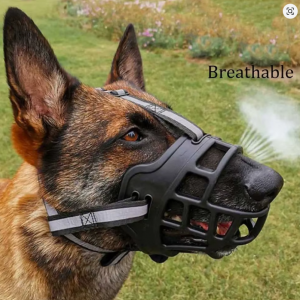
Look for a muzzle that feels wearable: stable, light, and not overly restrictive. A breathable design is usually the most practical choice when you need something for short, controlled outings.
2) For training and higher-drive environments
If you’re working around triggers or in structured training sessions, you’ll likely want something with a more secure build and confident fit — a muzzle that stays put when your dog goes from zero to rocket speed.
3) For professional/stronger “security” needs
Some owners prefer a sturdier construction (like leather or metal) for specific handling situations. If your Malinois is powerful, persistent, or you need a more “serious” option, material choice matters.
Muzzle types: basket vs soft vs leather vs metal (simple guide)
Here’s what most Malinois owners end up choosing between:
-
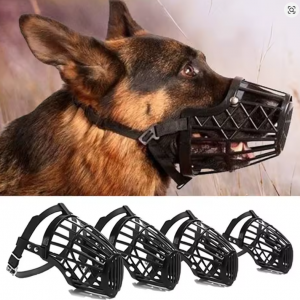
Basket-style / ventilated muzzles: best all-around option because they allow airflow. Many also allow your dog to take treats during training (depending on the design).
-
Soft/fabric muzzles: okay for very short moments, but they can limit panting — not ideal for an athletic breed.
-
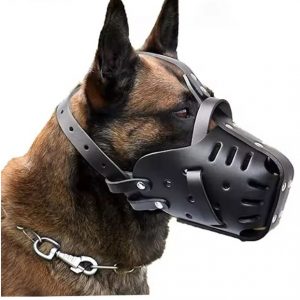
Leather muzzles: sturdy, classic, and often chosen for a more secure feel with better comfort than stiff materials.
-
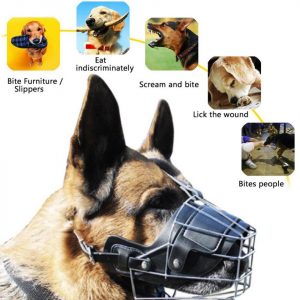
Metal muzzles: strongest structure, typically used when maximum durability is the priority.
If you’re unsure, start with comfort + ventilation first. A Malinois that tolerates the muzzle calmly is a Malinois you can actually train with.
Fit matters more than brand (how to measure in 2 minutes)
A “great muzzle” that fits wrong becomes a nightmare fast. Use this checklist:
-
Measure snout circumference (around the widest part of the muzzle area)
-
Measure snout length (from the tip of the nose to just below the eyes)
-
Check the pant test: your dog should be able to open their mouth enough to pant
-
Check rub points: no digging into the bridge of the nose or under the eyes
-
Stability test: it shouldn’t twist or slide when your dog turns quickly
Always follow the size chart on each product page — and if you’re between sizes, choose the option that keeps breathing/panting comfortable.
How to muzzle-train your Belgian Malinois (the stress-free way)
This is the part most people skip — and it’s why dogs “hate” muzzles.
Step 1: Let your dog investigate it
Place the muzzle on the floor. Reward any calm interest.
Step 2: Turn it into a treat magnet
Hold it open and let your dog put their nose in voluntarily to get a reward. No straps yet.
Step 3: Add one second, then quit
Touch the straps for a moment, reward, and stop. Keep sessions short.
Step 4: Build up time gradually
A few seconds becomes 10 seconds, then 30. Always end on a calm win.
Step 5: Pair it with movement
Once your dog is relaxed, do a quick “muzzle on → walk to the door → reward → muzzle off.”
A Malinois learns fast — especially when the experience feels predictable and positive.
 No products in the cart.