
-

Malinois Agility Cone Set
$70.00 – $135.00
Why Belgian Malinois toys matter (more than with most breeds)
A Belgian Malinois is smart, fast, and wired to work. Without enough mental and physical stimulation, that energy doesn’t disappear — it simply gets redirected into “creative projects” like chewing furniture, obsessive barking, digging, or pacing.
The right Belgian Malinois toys help you:
-
Release drive in a healthy way (bite, chase, tug, retrieve — but with rules)
-
Reduce boredom and destructive habits
-
Improve focus during training
-
Build your relationship through interactive play
-
Create structure on days when long exercise isn’t possible
Think of toys as training tools you can use daily — not random distractions you toss in a basket.
How to choose the best toy for your Mal
Not every toy fits every Malinois — or every goal. Use this simple matching method:
If your Malinois needs to burn energy fast…
Choose retrieval and chase toys (balls, high-movement games, agility-style setups). These are perfect for short, intense sessions.
If your Malinois gets bored easily…
Go for problem-solving toys (puzzle games, treat-dispensing options, structured “find it” routines). Mental work often tires a Malinois out faster than a casual walk.
If your Malinois has a strong bite / tug drive…
Choose tug and grip-building toys that encourage controlled engagement (with rules: start, stop, release, reward). These are ideal for impulse control and engagement training.
If your Malinois is an intense chewer…
Pick durable chew options and rotate them — but avoid promising anything is truly “indestructible.” With a determined Malinois, the goal is safer, longer-lasting play, not miracles.
Toy safety for a powerful breed (please don’t skip this)
Belgian Malinois play hard, and their jaws are strong — so safety matters as much as fun.
Use these rules:
-
Always size up correctly (too small = choking risk)
-
Supervise tug and chew sessions, especially with new toys
-
Inspect daily for torn seams, loose threads, cracks, or sharp edges
-
Rotate toys (3–5 in rotation keeps novelty high and destruction lower)
-
If your dog destroys toys fast, switch to short, structured play sessions instead of “all-day access”
How toys support training (and make obedience easier)
If you want a Malinois to listen, you need motivation. Toys are powerful rewards because they speak your dog’s language: movement, chase, grip, engagement.
Here’s how to use toys during training:
-
Reward with play after a correct behavior (sit, heel, recall)
-
Use a ball/tug to build drive, then teach control (wait → release → play)
-
Use interactive toys to train focus around distractions
-
Turn play into a structured routine: start cue + stop cue + “drop it”
Small, consistent sessions beat long chaotic play every time.
Featured picks in this category
If you’re choosing today, these are two great “foundation” options for a Malinois lifestyle:
-
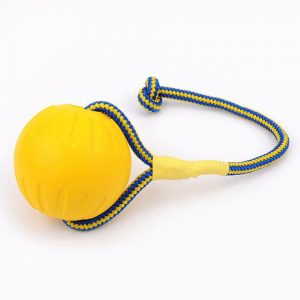
BMS™ Training Ball Toy (perfect for reward-based obedience, fetch, and engagement)
-
Malinois Agility Cone Set (great for coordination, speed work, and DIY obstacle drills)
 No products in the cart.