
If you have ever seen a Belgian Malinois hit a target at full speed, then you already know the truth. They are fast, intense, and extremely committed once they get the hang of the game. That’s why Belgian Malinois bite work safety is so important. A dog bite sleeve (and the right dog bite suit) can be done correctly only if you get the right equipment and use it correctly. I
In this guide, we will show you what type of sleeves and covers are best for Belgian Malinois and what are the most common mistakes that can get you hurt.
I have to say that bite work equipment is not a toy. If you are a beginner in dog bite work, you should work with an experienced helper/decoy or a qualified working dog trainer.
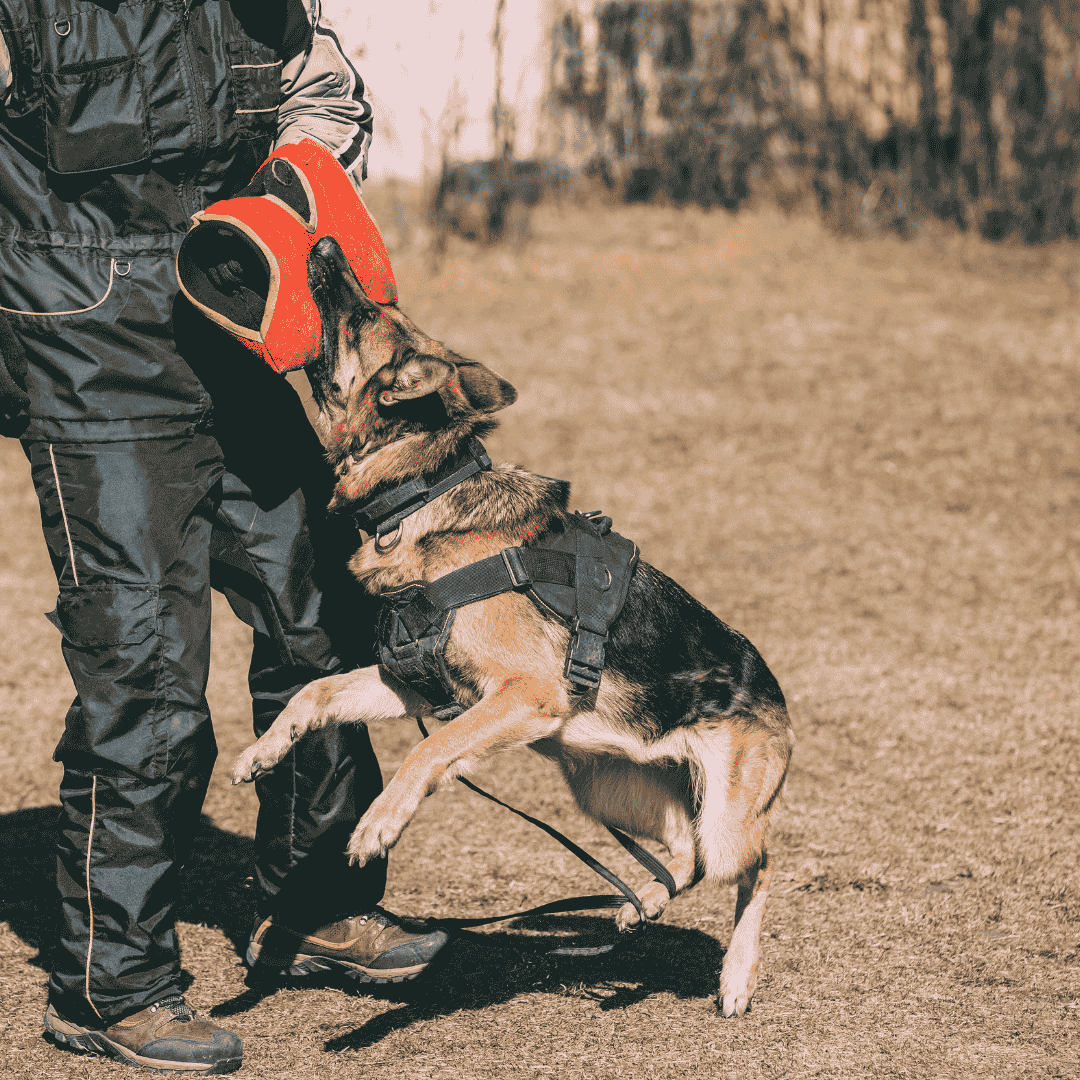
Why Belgian Malinois bite work safety matters
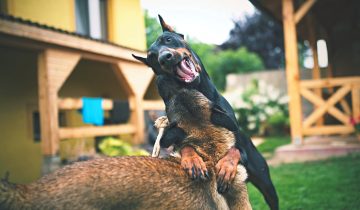
Malinois are driven to chase and react quickly to movement. They attach quickly when they trust you, and their bite is a fierce push on the target.
This means that your training equipment should be on the same level as your dog.
A bite sleeve that is not compatible can lead to problems, such as shallow bites, jittery bites, target error where the hands or arms are mistakenly targeted. It can also lead to re-biting, thrashing, and a variety of problems for your helper who may get frightened and move erratically.
Dog bite sleeve vs. bite suit: what’s the difference?
Dog bite sleeve (most common for training)
A dog bite sleeve is the classic tool: the dog bites the sleeve, the helper presents it, and you build grip, targeting, confidence, and control.
People also search for this as:
- dog bite sleeves
- bite sleeve for dogs
- bite sleeve for dog
- dog training bite sleeve
Sleeves are great for:
- learning clean targeting (presented surface)
- building full grips and calm pressure
- teaching outs, re-guards, and obedience around drive
Dog bite suit (advanced / full-body targeting)
A dog bite suit (or dog bite suits) covers more of the helper’s body so the dog can learn to target different areas and work more realistic scenarios.
Common related phrases:
- dog bite suit training
- dog bite suit
- dog training bite suit
A suit is usually for:
- advanced sport work (depending on rules)
- scenario training with an experienced decoy
- proofing targeting away from “the sleeve picture”
Important: Suits are not automatically “safer.” They require skill, fit, and correct movement. A poorly fitted suit can still result in painful impacts, bruises, and risky moments.

When should owners/trainers use these tools?
Use a dog bite sleeve when you’re working on:
- initial prey engagement and confidence
- targeting consistency (where the dog bites)
- grip development (full mouth, calm pressure)
- clean releases (outs) and re-engagement on cue
- obedience in drive (heel, down, recall near the sleeve)
Bite Dog covers can be used when you want:
- hygiene (easy to wash, less stink)
- different textures and “pictures” (so your Malinois doesn’t get sleeve-fixated)
- longer sleeve life (covers take the wear instead of the core sleeve)
Use a dog bite suit when:
- your dog already has a reliable grip and control
- your decoy/helper is experienced and can safely manage movement
- you’re working advanced targeting or realism (not “just more biting”)
The #1 rule of bite work safety: don’t train alone if you’re not experienced
Most accidents happen when:
- someone tries to be the helper without skill
- the dog is over-aroused and under-controlled
- the equipment is wrong for the dog’s level
- the helper “yanks” or panics, triggering chaotic gripping
If you’re a newer handler, the best safety upgrade isn’t a thicker sleeve—it’s a competent decoy and a structured plan.
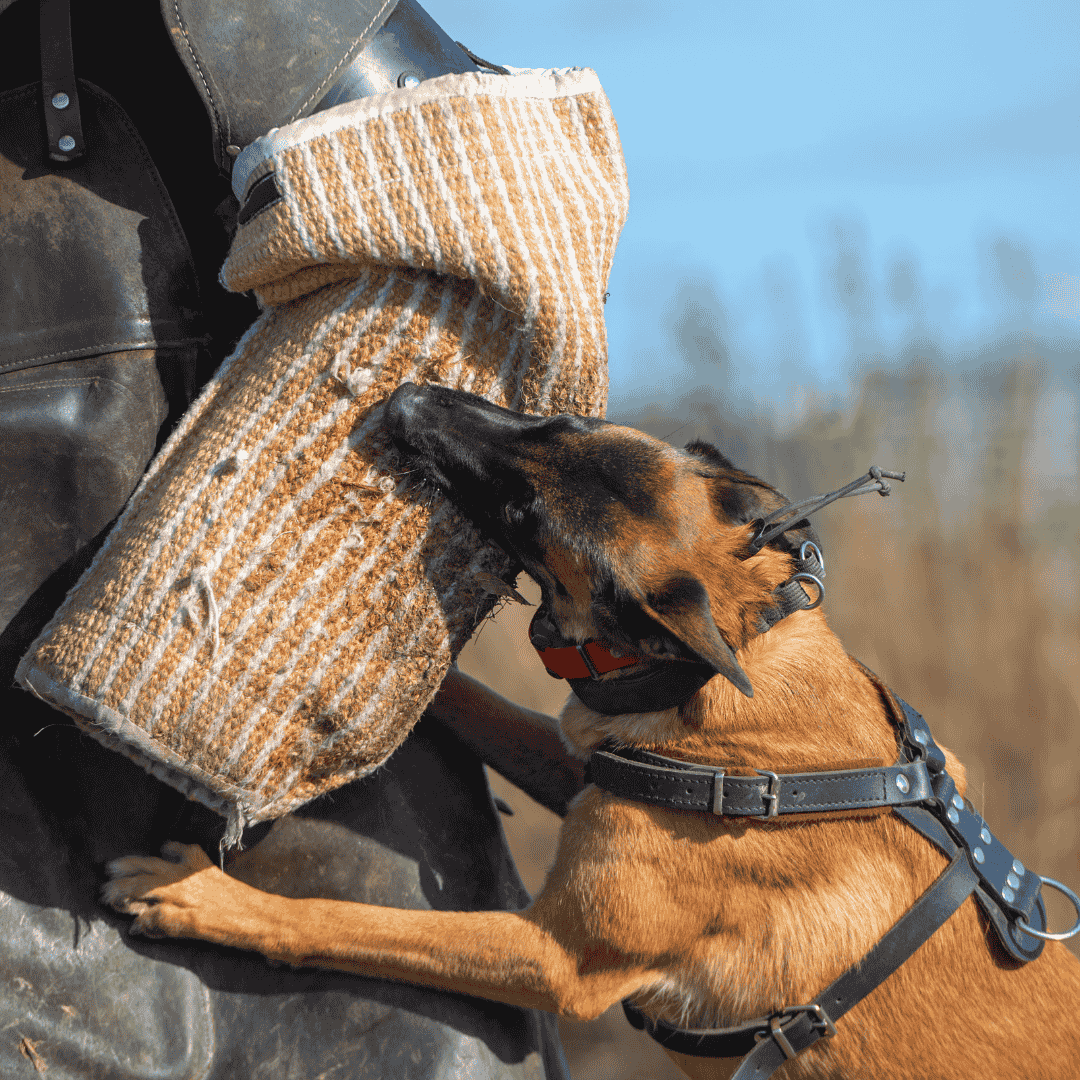
How to choose the right dog bite sleeve for a Belgian Malinois
1) Match the sleeve to your dog’s training stage
Puppy/intro sleeves
Softer, lighter, often shaped to encourage a full grip. Best for confidence-building and correct targeting.
Intermediate sleeves
More structure and durability. Helps transition to stronger pressure and cleaner grips.
Advanced/hard sleeves
Stiffer, heavier, built for power. These are not “better” by default—if you go too hard too early, many dogs start chewing or shallow-gripping.
Malinois tip: Many Malinois develop drive fast. Don’t confuse “enthusiasm” with “readiness.” Choose what builds calm, full grips rather than frantic biting.
2) Decide: left arm, right arm, or hidden/short sleeve?
- Traditional arm sleeves are common for foundational work.
- Short sleeves can be used to reduce the “big obvious target” and improve precision, but they demand clean presentation.
- Hidden sleeves are advanced tools and require experienced handling (and usually suit components or special jackets).
If your dog is still learning control, don’t make the picture too confusing too soon.
3) Consider bite surface and shape
A good bite sleeve for dogs should allow:
- easy presentation of a consistent surface
- enough “give” for a full bite (depending on stage)
- stable structure so the dog doesn’t slip and re-bite wildly
Look for shapes that naturally guide the dog into a full-mouth grip rather than a front-teeth snatch.
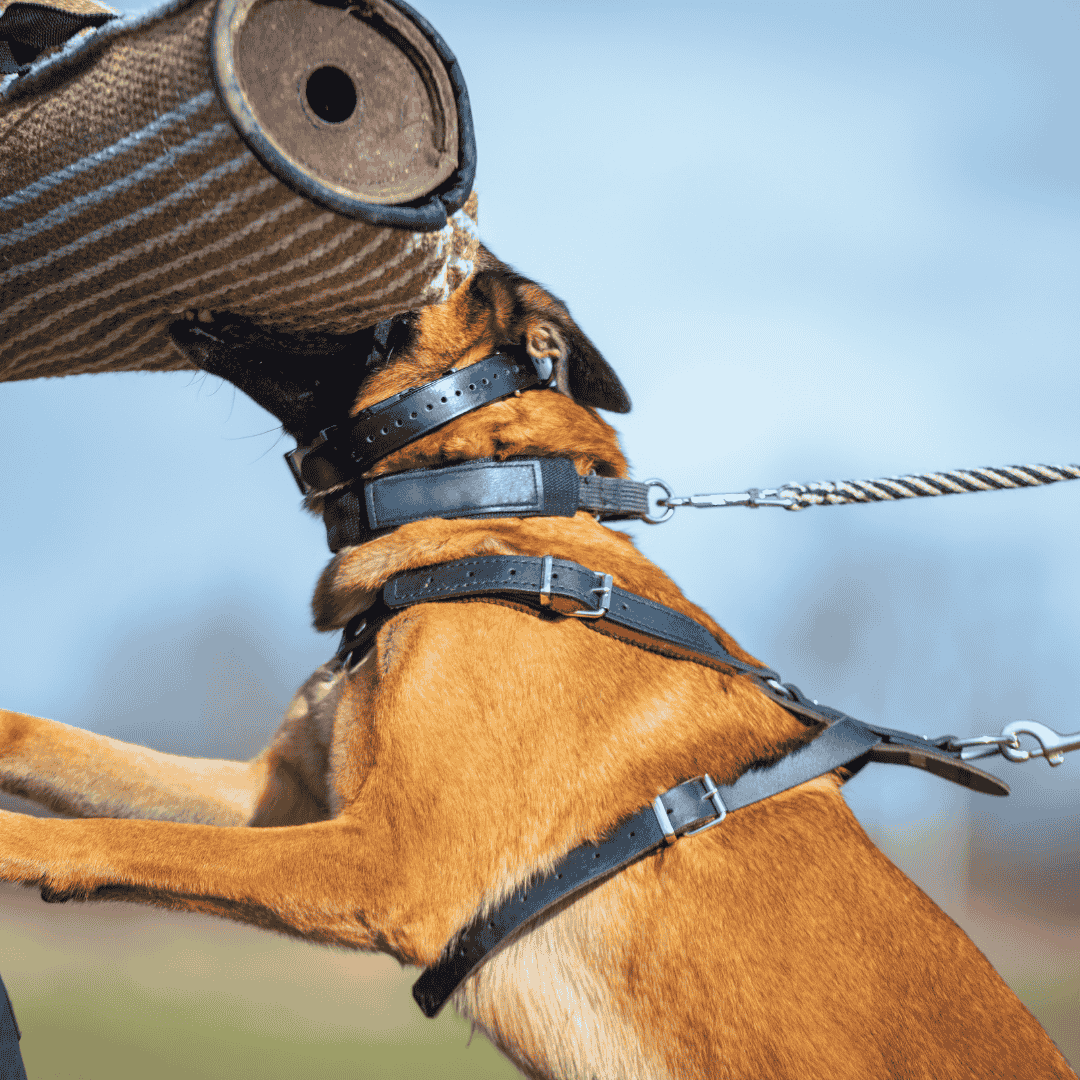
4) Safety features: handles, straps, and helper control
If the helper can’t control the sleeve, the session gets messy.
Check for:
- secure internal handles (not slippery)
- reliable straps/buckles
- predictable positioning (so the helper isn’t adjusting mid-bite)
For Malinois, control matters because they often add intensity quickly once engaged.
5) Durability vs. learning quality
Heavier isn’t always safer for learning. A sleeve that’s too hard can cause:
- chewing and frustration
- shallow bites
- targeting avoidance
Choose durability that fits the dog’s grip and maturity—not just what looks toughest.
Why bite covers matter (and why your sleeve will last longer)
Bite covers are the underrated hero of clean bite work. A cover is the removable “skin” over a sleeve that:
- protects the main sleeve from wear
- changes texture and grip feel
- helps prevent your Malinois from obsessing over one specific sleeve look/smell
If you want to browse options made specifically for your breed’s needs, start here:
https://belgianmalinois.store/product-category/bite-covers-for-belgian-malinois
When to use different covers
- Early training: a cover that helps the dog commit to a full, calm grip
- Building discrimination: rotate covers so the dog learns “the job,” not “that exact sleeve”
- Hygiene season: if your sleeve smells like a swamp… it’s time
Pro tip: Have multiple covers and rotate them. Let them dry completely between sessions.
How to use a dog training bite sleeve on Belgian Malinois
Here’s a safer, smarter flow that helps avoid common accidents:
Step 1: Start the session with obedience and clarity
A Malinois should understand:
- when the game starts
- when the game stops
- what the release cue means
Even a 30-second warm-up (heel, focus, down) can reduce frantic launching.
Step 2: Present a clean target
The helper presents the dog bite sleeve clearly—no teasing with hands, no flailing.
If the dog misses, reset. Don’t “accidentally reward” biting the wrong place.
Step 3: Reward full grips, not chaos
You want:
- deep, calm grip
- steady pressure
- minimal re-biting
- clear behavior after the bite (hold, guard, or release depending on your plan)
If your dog is thrashing, slow it down. A calmer bite is safer and more useful long-term.
Step 4: Keep sessions short
Especially with Malinois, more reps isn’t always better. End on a clean win before the dog gets sloppy and over-aroused.
Step 5: Teach the out like it’s a skill—not a fight
Don’t turn the out into a wrestling match.
- use a clear cue
- reward the release
- re-bite only when you’re confident the dog understands the rules
A clean out is one of the biggest safety tools you’ll ever teach.
Common mistakes that cause injuries (and how to avoid them)
“I’ll just be the helper for my own dog.”
This is where most people get tagged. Being a decoy is a real skill: timing, movement, angles, pressure, and reading the dog.
Using advanced sleeves too early
Hard gear doesn’t magically create strong grips. It often creates conflict, chewing, and messy targeting.
Allowing sleeve obsession
Rotate covers, vary pictures, and keep obedience in the game. Your Malinois should learn “work,” not “that sleeve.”
No plan for arousal and recovery
If your dog is screaming, spinning, and losing their brain, you’re not building skill—you’re rehearsing chaos.
Dog bite suit training: when it makes sense (and when it doesn’t)
A dog training bite suit can be excellent for advanced work, but it’s not a beginner shortcut. Choose suit training when:
- your dog has reliable grip + out
- your decoy can safely present targets
- you’re working structured scenarios, not random intensity
If you’re not there yet, spend more time polishing sleeve skills. A well-trained Malinois with strong sleeve fundamentals transitions better to a suit anyway.
A simple gear checklist for safer bite work
- correctly matched dog bite sleeve for your dog’s stage
- multiple bite covers (rotate for hygiene + variety)
- a confident, skilled helper/decoy
- a training plan (what are you rewarding today?)
- a clear out cue and rules for re-biting
- a safe training space with good footing
FAQ: Dog Bite Sleeve & Bite Work Safety for Belgian Malinois
1) Are dog bite sleeves safe to use at home?
They can be, but only if you know what you’re doing and you’re using the right equipment for your dog’s level. A dog bite sleeve reduces risk compared to “improvised” targets, but bite work still needs structure, clear rules, and ideally an experienced helper/decoy. The biggest danger at home isn’t the sleeve—it’s poor timing, messy presentation, and over-arousal.
2) What’s the difference between a dog bite sleeve and a bite sleeve cover?
A dog training bite sleeve is the protective training tool the helper wears. A bite cover is the removable outer layer that goes over the sleeve. Covers help with hygiene, extend sleeve life, and let you vary texture/“picture” so your Malinois doesn’t get fixated on one specific sleeve. You can find cover options here:https://belgianmalinois.store/product-category/bite-covers-for-belgian-malinois
3) Which dog bite sleeve is best for a Belgian Malinois?
It depends on training stage:
- Intro/softer sleeves: great for building confidence and full-mouth grips. I recommend this type of bite sleeves to puppies who are starting with this type of training.
- Intermediate sleeves: for cleaner grips and stronger pressure.
- Advanced/hard sleeves: for experienced dogs with mature grip and control
For Malinois, it’s usually smarter to choose a sleeve that rewards calm, full grips rather than pushing “hard gear” too early.
4) Can I use a bite sleeve for dogs to teach protection?
A bite sleeve for dogs is a tool used in sports and Belgian Malinois bite work, but “protection” is a serious topic. If your goal is protection work, don’t DIY it—work with a reputable trainer who follows legal, ethical, and safety standards. Most people actually want confidence, control, and structured drive outlets, not real-world protection.
5) What age can a Belgian Malinois start bite sleeve training?
Many programs start foundations young. This includes engagement, tug play, targeting games, but actual structured biting on a sleeve should be guided by a professional who understands development, teeth, joints, and the dog’s temperament. If your Mal is still growing, foundations and control matter more than “hard bites.”
6) How do I prevent sleeve obsession (my dog only wants the sleeve)?
Do three things:
- Rotate covers and vary textures/looks (this helps a lot)
- Pair bite work with obedience (start/stop cues, heeling, downs)
- Reward control as much as the bite (outs, guarding calmly, re-bite on cue)
Browse covers to help with variety here: https://belgianmalinois.store/product-category/bite-covers-for-belgian-malinois
7) How often should we train with dog bite sleeves?
Belgian Malinois bite work should be short, focused sessions beat long marathons. Many teams do 1–3 structured bite sessions per week (varies by sport, goals, and the dog), and fill the rest with obedience, fitness, and recovery. Overdoing bite work can create sloppy grips and frantic behavior.


 No products in the cart.